Apply Now Programmes Virtual Tour CT-SET 2026 Ph.D
Admissions
Open 2026-27
Apply now
Apply Now
Home  /  Programmes  /  B.Sc. (Airlines & Tourism Management)

B.Sc. (Airlines & Tourism Management)

Duration: 3 Years Category: Graduate Programs

Programme Details

About the Programme

B.Sc. (Airlines & Tourism Management) is a three-year degree program focused on preparing students for careers in the aviation and tourism sectors. It covers topics such as airline operations, airport management, tourism marketing, travel agency management and customer service. The course combines classroom learning with practical industry exposure through internships. Graduates can pursue roles in airlines, travel agencies, tour operators and related businesses.

Eligibility Criteria

10+2 or equivalent in any stream with English as a compulsory subject from a recognized board/University and having atleast 50% marks

Candidates with 10+2 certification from Hunar Sikhiya School (HSS) are also eligible.

Register Now

Why Choose CT University

Why CT University is the Right Choice for Your Future

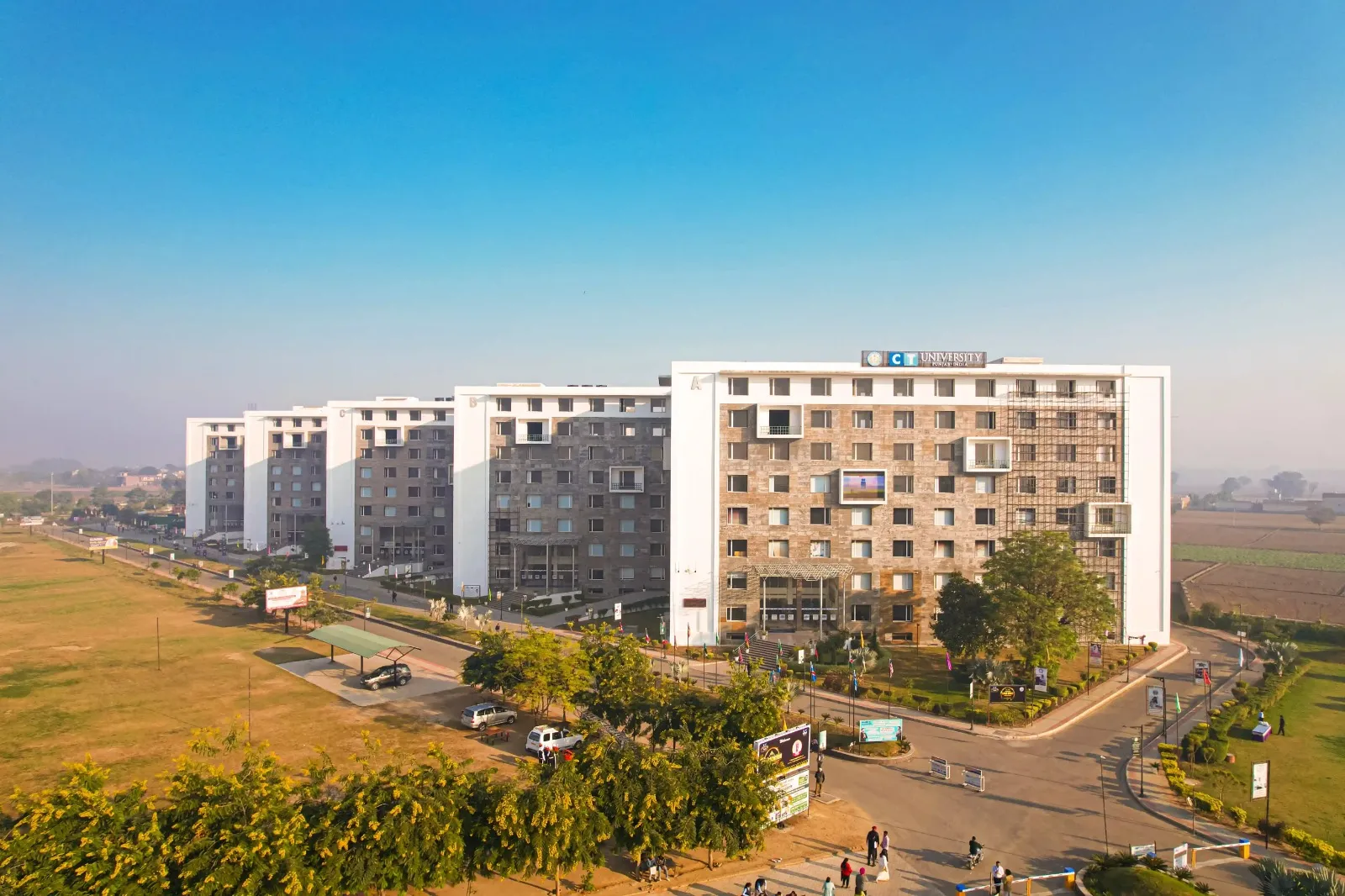
CT University Campus

At CT University, we combine industry-integrated learning and global academic partnerships, backed by the CT Group's 30+ year legacy, to prepare students for careers that actually last.

Industry-oriented
learning

Modern campus
facilities

Academic excellence &
mentorship

Global opportunities &
placements

Fee Structure & Scholarships

Program Fee Details

Fee Type Amount
Programme Fees (per Semester) ₹55000
Examination Fees ₹3000
International Fee (USD) $2500

Merit Based Scholarship Scheme

Unlock up to 90% Scholarship through CTSET, with scholarships worth Rs 40 Crore! Get access to top-quality education at CT University, Ludhiana — without the financial burden.

Slab >=60% - 74.99% >=75% - 89.99% >=90% & Above
Fee ₹50000 ₹45000 ₹40000

Students can avail these slots depending on the marks they have scored. Each slot reflects a different academic range, helping students understand where they stand and what benefits they qualify for.

Course Curriculum

1ST SEMESTER SUBJECTS

Introduces the structure, scope, functions, stakeholders and emerging trends of the tourism and hospitality industry.
Course Outcome:
CO1: Understand the concept, evolution and basic terminology of tourism and hospitality.
CO2: Identify different types of tourism products and related marketing strategies.
CO3: Recognize and differentiate various forms of tourism paradigms.
CO4: Understand the structure and functioning of the hotel and hospitality industry.
CO5: Demonstrate basic knowledge of hospitality operations and service management.
CO6: Learn about key international and national tourism organizations and their functions.

Introduces fundamental concepts, types, components, motivations and emerging trends associated with tourism and travel.
Course Outcome:
CO1: Explain the components, systems and typologies in tourism including tourist behavior types.
CO2: Analyze tourist motivations, psychographics and behavioral segmentation in travel.
CO3: Evaluate the economic impacts of tourism on GDP, employment and foreign exchange.
CO4: Assess the socio-cultural and environmental impacts of tourism and sustainability practices.
CO5: Apply principles of tourism planning and policy frameworks to destination development.
CO6: Examine contemporary issues, trends and crisis management in the modern tourism industry.

Introduces the fundamentals of aviation, airline operations, airport systems, aircraft types and the role of airlines in tourism.
Course Outcome:
CO1: Understand the foundation, evolution and significance of the Indian aviation industry.
CO2: Demonstrate familiarity with aviation terminology, airport layout and the roles of aviation personnel.
CO3: Identify major airline and airport codes, terminologies and baggage handling protocols.
CO4: Recognize technical parts of an airplane and essential travel documentation processes.
CO5: Understand aviation safety, security standards and emergency procedures.
CO6: Describe the roles of major national and international regulatory bodies in aviation.

Provides practical exposure to basic airline and aviation operations, including airport procedures, airline documentation, passenger handling and service practices.
Course Outcome:
CO1: Apply IATA/ICAO codes correctly to identify airports and airlines.
CO2: Use standard aviation terminology and phonetic alphabet in communication scenarios.
CO3: Classify various aircraft types based on manufacturer and operational capacity.
CO4: Simulate ground procedures including airport layout, boarding and baggage handling.
CO5: Interpret and prepare airline documentation like tickets and itineraries.
CO6: Demonstrate in-flight and ground safety announcements and emergency procedure k

Develops an understanding of India's diverse society, cultural heritage, traditions, customs, religions, festivals and regional practices relevant to tourism.
Course Outcome:
CO1: Define key concepts of society and culture and explain their interrelationship.
CO2: Describe the structural features of Indian society including caste, family and marriage.
CO3: Identify the major religions of India and their associated cultural practices and festivals.
CO4: Analyse India’s tangible and intangible cultural heritage relevant to tourism promotion.
CO5: Interpret social changes and demonstrate cultural sensitivity in dealing with diverse groups.
CO6: Understand the role of cultural policies and institutions in preserving heritage, analyse methods of heritage management.

Provides practical knowledge of passports, visas, tickets, travel insurance, permits and other essential documents required for domestic and international travel.
Course Outcome:
CO1: Identify and describe various travel documents and their significance in international travel.
CO2: Demonstrate the process of filling out and submitting applications for passports and visas.
CO3: Interpret and comply with customs regulations and health documentation requirements.
CO4: Simulate real-life scenarios involving immigration and customs procedures.
CO5: Evaluate the importance of accurate travel documentation in ensuring smooth travel experiences
CO6: Develop the ability to manage complete travel documentation processes through simulations, ensuring accuracy and compliance.

Develops foundational English language and communication skills required for academic, professional and customer-facing environments.
Course Outcome:
CO1: Use standard English aptly in listening, speaking and communicative situations
CO2: Write error-free sentences and short texts in English Language
CO3: Comprehend reading passages effectively
CO4: Demonstrate use of apt and relevant vocabulary at lower intermediate to intermediate level
CO5: Develop effective oral presentation skills, including audience analysis and body language
CO6: Apply audio-visual aids to enhance communication and improve pronunciation

Introduces principles of physical fitness, healthy lifestyles, wellness and sports nutrition for maintaining personal and professional well-being.
Course Outcome:
CO1: Understand the concept of health, hygiene & sanitation.
CO2: Apply the food hygiene practices for promoting health
CO3: Assess the impact of different nutrients on sports performance
CO4: Synthesize the importance of antioxidants in exercise and sports performance.
CO5: Analyze the impact of nutrition on strength training and vegetarian athletes.

Introduces entrepreneurial thinking, creativity, innovation, opportunity recognition and basic business concepts for developing an entrepreneurial mindset. Entrepreneurship Mindset-I shall be delivered through blended and self-paced learning approaches, supported by experiential learning, mentoring, startup-oriented activities and innovation practices.

Develops awareness of ethical values, self-awareness, harmony, empathy, responsible behaviour and human relationships in personal and professional life.
Course Outcome:
CO1: Define and identify core universal human values and relate them to their own lives.
CO2: Demonstrate self-awareness and initiate personal transformation (Human Revolution
CO3: Appreciate the importance of Sewa (selfless service), compassion and empathy.
CO4: Apply principles of truth, non-violence and moral responsibility in real-life dilemmas.
CO5: Evaluate ethical decisions involving sacrifice and righteousness through case studies.
CO6: Reflect on the relevance of renunciation and simplicity in modern life for inner peace.

2ND SEMESTER SUBJECTS

Develops knowledge of airport systems, airline operations, passenger handling, ground services, safety procedures and essential aviation processes.
Course Outcome:
CO1: Describe the structure, scope and categories of airport and airline operational systems.
CO2: Explain the procedures involved in passenger handling and terminal management.
CO3: Demonstrate an understanding of ground handling services, baggage logistics and ramp operations.
CO4: Analyze airside operational functions and the interface with Air Traffic Control (ATC).
CO5: Evaluate airline scheduling techniques, slot management and turnaround planning.
CO6: Assess operational challenges and develop basic strategies for aviation crisis and emergency management.

Introduces fundamental management principles, functions, processes and managerial skills required for effective organizational performance.
Course Outcome:
CO1: Describe the core concepts, scope, functions and principles of management.
CO2: Students will be able to articulate the meaning of planning, outline the planning process and develop effective objectives, policies and procedures.
CO3: Students will demonstrate an understanding of the importance and various patterns of organization.
CO4: Students will be capable of conducting manpower planning.
CO5: Skillful Directing.
CO6: Develop effective decision-making skills.

Introduces travel agency functions, tour planning, itinerary development, reservation procedures, package tours and tour operation management.
Course Outcome:
CO1: Understand the Fundamentals of Travel Agency and Tour Operations.
CO2: Describe the organizational structure and functions of a travel agency.
CO3: Students will develop skills in planning and developing various types of tours, including escorted, independent and custom-designed tours.
CO4: Students will gain knowledge in financial management practices.
CO5: Students will be proficient in using Computerized Reservation Systems and Global Distribution Systems for managing travel reservations and related operations.
CO6: Students will understand the legal and regulatory frameworks governing travel agencies and tour operators.

Introduces the principles, organization, equipment, service methods and basic operational procedures of food and beverage service.
Course Outcome:
CO1: Define the scope and classification of catering establishments, distinguishing between commercial and non-commercial sectors.
CO2: Identify and differentiate between different types of food and beverage services such as table service (English/Silver, American, French, Russian), self-service (buffet, cafeteria) and specialized services (Guerdon, tray, trolley).
CO3: Describe the types and usage of food and beverage service equipment including furniture, chinaware, silverware, glassware, linen, disposables and special equipment.
CO4: Outline the service methods for different meals including breakfast, brunch, lunch, hi-tea, dinner and supper.
CO5: Explain the principles and challenges of room service operations.
CO6: Evaluate the use of technology to enhance room service efficiency, including lead time management from order taking to clearance.

Provides practical training in basic food and beverage service techniques, table setup, service equipment handling, order taking and guest interaction.
Course Outcome:
CO1: Demonstrate knowledge of proper restaurant etiquettes and protocols in guest interaction, service delivery and team coordination.
CO2: Apply comprehensive hygiene practices to maintain cleanliness, safety and sanitation standards in restaurant operations.
CO3: Identify and utilize various restaurant equipment effectively, ensuring their proper handling and maintenance for efficient service delivery.
CO4: Execute mis-en-place and mis-en-scene activities proficiently to prepare for food and beverage service, ensuring smooth and organized operations.
CO5: Demonstrate proficiency in laying tables for different types of service setups, selecting appropriate crockery, cutlery and glassware to enhance dining experiences.
CO6: Perform beverage service competently, including hot and cold beverages and non-alcoholic drinks, adhering to service standards and guest preferences

Introduces geographical factors influencing tourism, major tourist destinations, physical and cultural resources, climate and tourism patterns worldwide.
Course Outcome:
CO1: Understand core geographical concepts relevant to tourism studies
CO2: Identify and analyze how geographical features influence tourism patterns
CO3: Understand the impact of climate and seasonality on tourism flow and planning
CO4: Demonstrate map reading and practical geographic interpretation skills
CO5: Apply aviation geography knowledge in professional contexts
CO6: Analyze geographical challenges to tourism development and sustainability

Develops professional grooming, personal presentation, social etiquette, dining manners, body language and appropriate workplace behaviour for the tourism and aviation industry.
Course Outcome:
CO1: comprehensive understanding of business etiquette and its importance in a professional setting.
CO2: Identify and understand the key elements of organizational culture
CO3: Understand the impact of professional etiquette on workplace relationships and productivity.
CO4: Recognize and respect the values and expectations of different cultures.
CO5: Demonstrate Effective Communication Skills
CO6: Understand the objectives and essentials of written business communication

Enhances English communication skills through advanced practice in speaking, listening, reading, writing, presentations and professional interactions.
Course Outcome:
CO1: Apply effective grammatical structures in English Language for speaking and writing
CO2: Utilize effective note-making techniques in English Language
CO3: Effectively summarize and paraphrase texts in English Language
CO4: Demonstrate use of apt and relevant vocabulary at intermediate to upper-intermediate level
CO5: Employ cohesive and coherent discourse in English communication
CO6: Produce well-organized written and spoken texts in English Language

Develops awareness of environmental systems, natural resources, biodiversity, pollution, conservation and sustainable development practices.
Course Outcome:
CO1: Apply an interdisciplinary approach to understand key environmental issues and critically analyse them to explore the possibilities to mitigate these problems.
CO2: Reflect critically about their roles and identities as citizens, consumers and environmental actors in a complex, interconnected world.
CO3: Enable students to develop an understanding of various ecological processes and how humans have impacted them.
CO4: To develop critical thinking about the effect of increasing population in the environment.

Develops entrepreneurial competencies through opportunity identification, creativity, innovation, business planning and entrepreneurial decision-making. Entrepreneurship Mindset-II shall be delivered through blended and self-paced learning approaches, supported by experiential learning, mentoring, startup-oriented activities and innovation practices.

Introduces patents, copyrights, trademarks, designs and other intellectual property concepts while developing awareness of protecting creative and innovative wor

3RD SEMESTER SUBJECTS

Introduces the integrated operations of front office and housekeeping departments, focusing on guest services, room management, coordination and quality standards.
Course Outcome:
CO1: Understand the structure, functions and significance of the Room Division department in the hospitality industry.
CO2: Demonstrate knowledge of key operations and procedures of the Front Office, including reservations, check-in/check-out, guest services and billing.
CO3: Identify and describe the responsibilities and procedures of the Housekeeping department, including room cleaning, maintenance and laundry operations.
CO4: Analyze the importance of guest cycle stages and the role of interdepartmental coordination in ensuring quality guest experiences.
CO5: Apply soft skills, communication techniques and sustainable practices relevant to Room Division operations and related industries (airline, tourism and hospitality).
CO6: Understand the role of technology and current trends in improving the efficiency and service quality in Room Division operations.

Provides practical training in front office and housekeeping operations through simulations, including reservations, guest handling, room servicing, inspection and interdepartmental coordination.
Course Outcome:
CO1: Understand the basic structure and functions of the Room Division department in hotels.
CO2: Demonstrate knowledge of guest handling procedures including reservation, check-in, guest services and check-out.
CO3: Apply basic communication and interpersonal skills in Front Office scenarios such as guest enquiries, complaints and special requests.
CO4: Recognize the basic housekeeping procedures required for maintaining room cleanliness and guest comfort.
CO5: Exhibit understanding of safety, security and standard procedures followed in Room Division operations.
CO6: Relate Room Division operations with broader customer service practices in the tourism and airline sectors.

Develops knowledge and practical skills in airline reservation systems, ticketing procedures, fare concepts, itinerary preparation and passenger booking services.
Course Outcome:
CO1: Understand the concept, types and regulations related to airline tickets and fare rules.
CO2: Demonstrate knowledge of airport procedures, documentation and standard aviation codes.
CO3: Explain the functions and benefits of Computer Reservation Systems (CRS).
CO4: Describe the evolution, platforms and significance of Global Distribution Systems (GDS).
CO5: Analyze the role of IATA, ICAO and other bodies in maintaining airline ticketing standards.
CO6: Apply practical airline ticketing skills using industry-standard tools and processes and analyze emerging technologies and trends impacting the future of airline ticketing.

Explores major Indian tourism destinations, their attractions, cultural heritage, geographical features, tourism products and potential for domestic and international tourism.
Course Outcome:
CO1: Explain the overview and economic importance of tourism in India and classify types of tourist destinations.
CO2: Identify and describe major historical and cultural destinations of India under the Swadesh Darshan scheme.
CO3: Analyze major adventure tourism destinations and categorize different adventure activities in India.
CO4: Describe religious tourism circuits and key pilgrimage sites of Hinduism, Buddhism, Sikhism and Islam.
CO5: Understand the significance of national parks, wildlife sanctuaries, coastal and island tourism circuits.
CO6: Identify and analyze emerging tourism trends and niche destinations in India and apply this knowledge to design innovative, sustainable and market-relevant tourism experiences.

Introduces basic first-aid principles and emergency response techniques for managing common injuries, accidents and medical situations in tourism and aviation environments.
Course Outcome:
CO1: Will emphasize the students to learn about first aid techniques.
CO2: Students will learn about the basic first aid techniques.
CO3: They will understand the basics of bone fractures and dislocation of bones.
CO4: They will learn how to manage ways of electric shock conditions.
CO5: Students will learn about the mechanism of drug toxicity.

Develops advanced entrepreneurial competencies through opportunity identification, business ideation, innovation, planning and application of entrepreneurial skills in tourism and aviation. Entrepreneurship Mindset-III shall be delivered through blended and self-paced learning approaches, supported by experiential learning, mentoring, startup-oriented activities and innovation practices.

Develops basic French language and hospitality vocabulary to facilitate professional communication with French-speaking guests in hotels, airlines, travel and tourism services.
Course Outcome:
CO1: Demonstrate basic proficiency in reading, writing, speaking and understanding the French language
CO2: Construct simple sentences and use essential vocabulary in everyday situations
CO3: Communicate basic personal information and engage in simple conversations with improved fluency
CO4: Comprehend short written texts and identify key information
CO5: Use basic French grammar structures (articles, verbs, pronouns) accurately in speech and writing
CO6: Write short passages such as self-introductions, preferences and descriptions using correct structures

Provides opportunities for self-paced online learning and certification in emerging or specialized areas relevant to tourism. MOOCs courses from recognized platforms such as NPTEL/SWAYAM may be mapped or included after registration opens.
Course Outcome:
CO1: Understand the concept, evolution and basic terminology of tourism and hospitality.
CO2: Identify different types of tourism products and related marketing strategies.
CO3: Recognize and differentiate various forms of tourism paradigms.
CO4: Understand the structure and functioning of the hotel and hospitality industry.
CO5: Demonstrate basic knowledge of hospitality operations and service management.
CO6: Learn about key international and national tourism organizations and their functions.
Department Elective-1

Develops knowledge of tourism products, services, their components, characteristics, development, marketing and role in creating competitive tourism experiences.
Course Outcome:
CO1: Understand the concept, evolution and basic terminology of tourism and hospitality.
CO2: Identify different types of tourism products and related marketing strategies.
CO3: Recognize and differentiate various forms of tourism paradigms.
CO4: Understand the structure and functioning of the hotel and hospitality industry.
CO5: Demonstrate basic knowledge of hospitality operations and service management.
CO6: Learn about key international and national tourism organizations and their functions.

Introduces the principles, techniques, responsibilities, communication skills and professional practices required for effective tour guiding and visitor interpretation.
Course Outcome:
CO1: Explain the history, role and importance of guiding in tourism.
CO2: Demonstrate verbal, non-verbal and storytelling communication skills effectively.
CO3: Distinguish between guides and escorts and perform escort responsibilities.
CO4: Manage emergencies and apply first aid knowledge during tour operations.
CO5: Identify professional attributes and regulatory requirements for guides/escorts.
CO6: Apply practical guiding techniques through mock tours and adopt emerging trends and technologies to enhance the quality and sustainability of guided experiences.

4TH SEMESTER SUBJECTS

Explores major international tourism destinations, their attractions, cultural heritage, geographical features, tourism products and significance in global tourism.
Course Outcome:
CO1: Identify Major Destinations in Asia
CO2: Analyze the Major Destinations in Europe
CO3: Evaluate the touristic significance of major destinations of Americas
CO4: Examine the major Destinations of Africa
CO5: Identify the major destination of Australian continent
CO6: Analyze the role of global tourism circuits, heritage sites and international festivals in shaping tourism flows and explore emerging trends and niche segments in global tourism

Introduces the planning, organizing, execution, marketing and evaluation of events, with emphasis on event logistics, budgeting, coordination, risk management and guest experience.
Course Outcome:
CO1: Students will be able to define and explain the core concepts and scope of event management.
CO2: Students will be proficient in conducting pre-event research and planning.
CO3: Students will be able to develop and implement effective event marketing strategies.
CO4: Students will be skilled in managing event operations and ensuring crowd safety.
CO5: Students will be capable of managing human resources for events efficiently.
CO6: Analyze and apply legal, ethical and technological considerations in event planning and execution, incorporating innovative approaches and risk management strategies to ensure successful and responsible event delivery.

Develops understanding of destination planning, development strategies, stakeholder management, infrastructure, sustainability, carrying capacity and destination competitiveness.
Course Outcome:
CO1: Explain the concepts, types, characteristics and significance of tourism destinations and evaluate the role of tourism in destination development.
CO2: Analyze destination planning processes, destination management systems, tourism potential assessment and demand-supply relationships in tourism destinations.
CO3: Apply principles of sustainable tourism development by integrating economic, social, cultural, environmental and contingency planning considerations.
CO4: Evaluate destination image formation, branding strategies, place branding approaches and product development techniques for tourism destinations.
CO5: Develop destination marketing and promotional strategies using the Six A’s framework, stakeholder analysis, marketing mix, competitiveness factors and communication tools.
CO6: Assess the role of institutional support, tourism policies, PPP models, governance mechanisms and destination mapping techniques in achieving sustainable destination development.

Develops awareness and practical strategies for managing stress, emotional well-being, resilience, interpersonal relationships and maintaining a healthy professional lifestyle.

Develops advanced entrepreneurial capabilities through business planning, innovation, opportunity evaluation, strategic decision-making and venture development in tourism and related sectors.

Provides opportunities for self-directed online learning and certification in emerging, specialized and industry-relevant areas of tourism, aviation, hospitality and professional development. MOOCs courses from recognized platforms such as NPTEL/SWAYAM may be mapped or included after registration opens.

Develops basic proficiency in an additional Indian or foreign language to enhance intercultural communication, employability and interaction with diverse tourists and industry professionals. Options include Basic French, Basic Korean, Basic Spanish, Basic Hindi, Basic Punjabi and Basic Urdu. Learn One More Bharatiya Bhasha / Foreign Languages courses are optional.

Develops knowledge and skills for disaster preparedness, risk assessment, mitigation, emergency response and recovery to ensure safety and resilience in tourism and aviation operations.
Department Elective-2

Develops knowledge of aviation safety standards, risk assessment, emergency procedures, disaster preparedness, crisis response and safety management in aviation operations.
Course Outcome:
CO1: Demonstrate Comprehensive Knowledge of the Historical Development of the Aviation Industry
CO2: Evaluate Current Growth Trends in National and International Aviation
CO3: Identify and categorize various emergencies in aviation
CO4: Evaluate Effectiveness of Security Measures in Aviation
CO5: Analyze the Impact and Implementation of Technological Innovations in Aviation Security
CO6: Evaluate crisis management frameworks, risk assessment strategies and post-disaster recovery processes in the aviation industry, in alignment with international standards and best practices.

Develops skills in managing human, technical, financial and operational resources to enhance efficiency, safety, productivity and service quality in airline operations.
Course Outcome:
CO1: Gain comprehensive knowledge of Airline Industry History and Structure
CO2: Students will demonstrate proficiency in flight operations management.
CO3: Apply the effective crew resource management skills.
CO4: Understand and manage Physical and Psychological Factors in Aviation.
CO5: Understand the job requirements and selection processes.
CO6: Analyze key financial and revenue management strategies in airlines, including pricing, yield management, fuel management, cost optimization and revenue protection
Department Elective-3

Examines the economic, socio-cultural and environmental impacts of tourism and develops understanding of strategies for maximizing benefits while minimizing negative effects.
Course Outcome:
CO1: Understand and explain the different types and importance of tourism impacts.
CO2: Analyze the economic contributions and challenges of tourism at local and national levels.
CO3: Evaluate the socio-cultural implications of tourism on host communities.
CO4: Assess environmental concerns and benefits related to tourism development.
CO5: Apply sustainable tourism concepts and tools to manage tourism impacts effectively.
CO6: Critically evaluate the role of policy frameworks, corporate responsibility, ethical practices, certification and community participation in managing tourism impacts

Introduces alternative forms of tourism such as ecotourism, rural tourism, adventure tourism and community-based tourism, with emphasis on sustainable and responsible tourism practices.
Course Outcome:
CO1: Understand the concept, principles and evolution of Alternative Tourism.
CO2: Analyze different forms of Alternative Tourism practiced globally and in India.
CO3: Demonstrate the ability to plan, develop and manage alternative tourism initiatives with stakeholder participation.
CO4: Evaluate the socio-cultural, economic and environmental impacts of Alternative Tourism.
CO5: Identify and analyze emerging trends and technologies shaping the future of Alternative Tourism.
CO6: Develop the ability to design, monitor, evaluate and adapt alternative tourism projects using appropriate management tools.
Department Elective-4

Introduces business travel, MICE tourism, corporate events, incentive travel, conferences and exhibitions, with emphasis on planning, management and service delivery.

Develops knowledge of promotional strategies, advertising, digital marketing, public relations, sales promotion and communication techniques for promoting tourism destinations and products.

5TH SEMESTER SUBJECTS

Provides structured industry exposure in airlines, airports, travel agencies, tourism organizations, or hospitality establishments to develop practical skills, professional competencies and workplace experience.

6TH SEMESTER SUBJECTS

Introduces legal frameworks, regulations, policies, contracts, consumer protection, liability and compliance requirements governing airlines, tourism and travel operations.
Course Outcome:
CO1: Understand the legal framework regulating tourism and aviation in India.
CO2: Identify and interpret laws related to travel agencies and air carriers.
CO3: Apply legal principles in resolving tourism and airline-related disputes.
CO4: Analyse liability issues, contract breaches and insurance in travel.
CO5: Evaluate environmental and ethical legal aspects of tourism.
CO6: Stay updated with emerging legal issues in the global tourism landscape.

Explores automation, digital technologies, artificial intelligence, self-service systems, reservation technologies and smart solutions transforming airline and tourism operations.
Course Outcome:
CO1: Understand the role and importance of automation and information technology in the tourism and airline industries.
CO2: Explain the structure and function of airline reservation systems and interpret flight information display systems (FIDS).
CO3: Operate major global CRS platforms such as Amadeus, Galileo, Sabre and Worldspan, with a focus on booking and ticketing functions.
CO4: Differentiate between manual and electronic tickets, understand ticket components and identify various types of ticketing procedures.
CO5: Analyse and interpret various fare types including special fares, mixed class journeys, RTW fares and universal travel plans.
CO6: Apply the knowledge of automated billing and settlement processes used in the airline and travel industries.

Introduces research concepts, methods, data collection, sampling, analysis and report writing to develop students' ability to conduct systematic research in hospitality and tourism.
Course Outcome:
CO1: Understand the role and significance of research in tourism planning, policy and management.
CO2: Distinguish between various types of research (qualitative, quantitative, exploratory, descriptive) and apply them in tourism studies.
CO3: Formulate research problems, hypotheses and objectives relevant to tourism issues.
CO4: Design appropriate sampling methods and data collection techniques for tourism research.
CO5: Analyse and interpret collected data using basic statistical tools and research software.
CO6: Prepare and present a structured tourism research report with findings, conclusions and recommendations

Develops awareness of immunity, nutrition, healthy lifestyles, preventive health practices and wellness strategies for maintaining physical and mental well-being.

Develops advanced entrepreneurial capabilities through venture development, innovation, strategic planning, business sustainability and application of entrepreneurial skills in tourism and aviation. Entrepreneurship Mindset-V shall be delivered through blended and self-paced learning approaches, supported by experiential learning, mentoring, startup-oriented activities and innovation practices.

Provides opportunities for self-paced online learning and certification in emerging and industry-relevant areas to support continuous professional development. MOOCs courses from recognized platforms such as NPTEL/SWAYAM may be mapped or included after registration opens.

Develops employability and workplace competencies through professional communication, interview skills, career planning, workplace etiquette, teamwork and leadership development. Professional Development–I is an optional, non-credit course. Evaluation shall be on a Satisfactory/Unsatisfactory basis.
Department Elective-5

Develops knowledge and skills in managing customer interactions, service quality, loyalty, feedback and relationship strategies to enhance customer satisfaction and retention in tourism and hospitality.

Introduces human resource practices including recruitment, training, performance management, motivation, employee relations and talent development in the tourism industry.
Department Elective-6

Explores the concepts, products, operations, risk management, safety and sustainability of adventure tourism activities and their role in destination development.
Course Outcome:
CO1: Understand the meaning, scope and classifications of adventure tourism including soft and hard adventure activities.
CO2: Identify and describe major land, water and air-based adventure activities such as trekking, rafting, paragliding and skiing.
CO3: Demonstrate knowledge of safety protocols, first aid and emergency response techniques essential in adventure tourism.
CO4: Analyse environmental and ethical concerns associated with adventure tourism and suggest sustainable solutions.
CO5: Evaluate the role of government bodies, adventure tour operators and global organizations in regulating and promoting adventure tourism.
CO6: Design an adventure tour itinerary considering risk management, environmental impact and client satisfaction.

Develops understanding of sustainable tourism principles, responsible practices, resource conservation, stakeholder participation and strategies for balancing tourism development with environmental and socio-cultural needs.
Course Outcome:
CO1: Define and explain the key concepts and principles of sustainable tourism and its relevance in modern tourism development.
CO2: Assess the environmental, socio-cultural and economic impacts of tourism activities on destinations and host communities.
CO3: Apply sustainable tourism planning tools and techniques for destination and business-level implementation.
CO4: Evaluate international and national policy frameworks, including SDGs and UNWTO guidelines, in the context of tourism sustainability.
CO5: Analyse real-world case studies and identify successful models and practices in sustainable tourism development.
CO6: Design basic strategies for promoting community participation, cultural preservation and environmental conservation through responsible tourism.

Program Outcomes & Features

Program Outcomes

  • Demonstrate understanding of the fundamental concepts, principles and theories in airlines, tourism and hospitality management.
  • Apply basic operational techniques and procedures in airline management, airport operations and tourism services.
  • Demonstrate good understanding of tourism operations, including tour planning, travel agency functions.
  • Develop basic customer service skills necessary for handling inquiries, resolving issues and enhancing passenger or tourist experience.
  • Exhibit ethical behavior and professionalism in dealing with customers, colleagues and industry stakeholders.

Labs and Facilities

Advanced Training Restaurant

Advanced Training Restaurant

Explore More
01
Airlines Lab

Airlines Lab

Explore More
02
Basic Training Restaurant

Basic Training Restaurant

Explore More
03
Front Office Lab

Front Office Lab

Explore More
04
Housekeeping Lab

Housekeeping Lab

Explore More
05
Model Guest Room

Model Guest Room

Explore More
06
Quantity Kitchen

Quantity Kitchen

Explore More
07

Backed by the Legacy of CT Group, Driven by Proven Success

30000+

Placements

800+

Collaborations

1.2Cr

Highest Placement

1800+

Recruiters

1 Lac+

Alumni

40Cr

WORTH SCHOLARSHIP

Hear From Our Students

"

Studying B.com in the School of Management Studies at CTU has been a delightful journey. The knowledgeable faculty and engaging coursework have not only deepened my understanding of commerce but also sparked a passion for it. With a perfect blend of academics and extracurricular activities, CTU has been the perfect launchpad for my future endeavors after gaining quality education and great leadership skills and exposure from industrial visits.

"

"CT University stands out for its student-centric approach. The B.Sc. Radiology program is designed to meet industry standards, and the professors are always approachable and ready to assist. The emphasis on practical learning and internships has given me confidence and clarity in my chosen field. I highly recommend this course to anyone interested in a career in radiology."

"

Studying at CT University was an enriching experience, thanks to access to advanced technology and learning resources. The state-of-the-art operation theatre labs, anesthesia workstations, and simulation-based training ensured we were always prepared for both theoretical and practical aspects of our studies.